SMITE

The MOBA is a fascinating genre. Everyone’s heard of them, the currently most-played PC game in the world is one, and they are the most popular e-sports genre on the planet, yet not everyone is a fan or has even properly tried them before. With humble origins as a fan mod of Warcraft III: Reign of Chaos, Defence of the Ancients (or DOTA) helped invent the concept and bring it to the public. It could be argued, however, that it never truly hit mass popularity until the behemoth that is League of Legends came along. Now the MOBA is truly in fashion, with everyone from Valve to Blizzard to EA either having released one already or being in the process of developing one as we speak.

We’ve had a Lord of the Rings-branded MOBA, Awesomenauts had a shot at a side-scrolling platformer/shooter MOBA, and elements of the genre are even creeping (huehuehue) into other games, such as the minion/creep-esque ‘grunts’ of Titanfall. You could say we’re reaching saturation point, similar to what happened with the first-person shooter over the last couple of generations. As with that situation, the industry is being dominated by a couple of heavyweights – League of Legends and DOTA’s sequel, DOTA 2. The genre also hasn’t won everyone over yet, with its often toxic community and steep learning curve.

With this in mind, SMITE has quite a challenge ahead of it now it has surfaced out of its long beta stage. Developed by Hi-Rez Studios, this mythology-themed MOBA flips the perspective from a top-down RTS to third-person action. Is it enough to make it stand out from the rest in the genre, whilst simultaneously appealing to newcomers and getting the MOBA faithful on board?

Final Fantasy XIV: A Realm Reborn

Two massively popular things in the world of gaming as you very well know are MMOs and Final Fantasy. They are also two things I’ve mostly avoided for one reason or another over the years. Massively multiplayer online games can feel a little gutless to me, lacking any form of storyline. Any game that tells me to go see someone over there, do that and repeat until bored without a good reason is not onto a good start, and one that does this without giving me a brooding story will generally lose my interest quickly. Final Fantasy VII was my last foray into the universe filled with big swords, logic puzzles, random battles and chocobos, and I’ve not seen any reason to go back or try any of the newer games.

With my obvious disdain perhaps I am the wrong person to review a game that is a mix of two things I don’t tend to gel with (are you? – Andy). However, I may well be the type of person that Final Fantasy XIV: A Realm Reborn is intended to entice to the universe, all the while attempting to please its die-hard invested fans.

Dark Souls II

To start this review, I feel I need to start with an admission. I played the original Dark Souls for about an hour, didn’t get it and subsequently sent it back to LoveFilm. I had no interest in ‘proving myself’ and simply wrote off the Dark Souls series as simply ‘not for me’.

Yet, being the undeniable professional that I am, when no-one else at TIMJ would step-up to the Dark Souls plate, I begrudgingly said yes and got involved. What follows is a review of Dark Souls II by someone that had no interest in playing the game beforehand, yet still went ahead and completed the game over 50+ hours.

Luftrausers

I’m not sure when I was drafted.

At the start everything seemed so simple, there was the sub and my plane – I was a trainee. No expectations. Then I was charged with going up. Up. Up all the way. I hadn’t a clue as to how to handle the craft I’d been bunged inside, its tiny shell appearing incapable of saving me from the pilots who were suddenly hurtling my way, guns ablaze. I fired. I survived. I was informed by a gentleman – who looked suspiciously like he’d happily stuff a rocket up a hippopotamus’ backside if there was a slim chance that it would give a man an edge in a dogfight – that I was a full fledged member of the crew. A Rauser.

I was sent out again. I found out how to work the rudders to effectively loop around my pursuers, avoiding their fire. I squeezed the trigger and fired upon the dogs that wouldn’t leave me alone. Dipping and diving through the sky, bouncing and skimming over the water until I found myself rammed into the stern of a supply ship. Clever, Rauser. Clever. What fresh new hell was this?

Thief

Is it weird that I love stealth games but haven’t played anything in the Thief series before? You’re right, it probably is a bit weird, but hey-ho, you can’t have played everything, right? Well, my time has finally come, as Eidos Montreal and Square Enix saw fit to breathe new life into this long dormant prowler, rebooting the adventures of master thief Garrett for a new generation.

The result is an able stealth adventure that shines occasionally, but ultimately sees ungainly technical errors ruin its otherwise impressive illusion.

Castlevania: Lords of Shadow 2

When offered the opportunity to review the sequel to Castlevania: Lords of Shadow, I jumped at the chance. The original was a beautiful, gothic action adventure that perhaps came as something of a surprise to many, certainly exceeding my expectations with a rich story, gorgeous, awe-inspiring scenery, and a cast straight out of a blockbuster film. The ending in particular was astounding and left me eagerly awaiting the next chapter.

Given the success of the first though, expectations were sky high, and unfortunately Lords of Shadow 2 has, to a fair extent, brought them crashing back down to earth.

Tiny Brains

The Montreal-based developer Spearhead Games has released Tiny Brains on Steam, PS3 and PS4. This indie studio has some impressive credentials indeed, or at least it does due to the fact that at least three ex-triple-A developers founded it; namely Simon Davreau, Atul Mehra and Malik Bourkhira.

While you may not recognise their names without Googling them, the games they’ve taken the lead to develop will be immediately recognisable. Assassin’s Creeds 2 and 3, Dead Space 3 and the Army of Two franchise. Tiny Brains seems a bit of a departure from their previous developments, and its relationship to these others is easily overlooked until you consider the puzzle elements of the Assassin’s Creed franchise, for example.

Need for Speed: Rivals

When Criterion Games took on the Need for Speed franchise a few years ago with Need for Speed: Hot Pursuit, it seemed like a marriage made in heaven: A classic arcade racing game picked up by the developers of Burnout, arguably the best arcade racing series ever, could only yield great results. Sure enough in Hot Pursuit and then Most Wanted it certainly did so. Here we are now, with a large part of the Criterion team having formed a new studio, Ghost, to make the latest in the annual franchise, Need for Speed: Rivals.

Have they managed to continue the trend of great openworld racing action though, or is this latest release a ghost (ahem) of its former self?

Tomb Raider (Definitive and Regular Editions)

There was a time when I’d have called Core Design and Eidos’ Tomb Raider one of the most important franchises in the industry. Our busty heroine, Lara Croft, grew well beyond her original aim as a fantasy object for young teen boys and became a pop-culture phenomenon in her own right. Gracing the covers of magazines, advertising countless products and coming to life in two movies, she almost could do no wrong – until 2003’s dire Angel of Darkness hit, that is, and then the wheels fell right off.

With Core Design removed from development duties as a result, Crystal Dynamics were the team tasked with bringing the old girl back to our attentions in 2006 with Tomb Raider: Legend. It was a decent game, certainly, but Lara’s relevance had already started to wear thin. By the time of their third game at the helm, the outdated Underworld, they’d been bested at every single level by Naughty Dog and the Uncharted series. With Lara’s image no longer what it was, the time was right for Crystal Dynamics to give Tomb Raider the fresh start it so desperately needed.

Thankfully, this reboot is so much better than I could ever have imagined, and the newly updated Definitive Edition on next-gen consoles provides a worthy facelift.

Assassin’s Creed IV: Black Flag

I was a huge fan of Assassin’s Creed, especially the Ezio trilogy, and then Assassin’s Creed III came out. Sadly I found it to be disappointing, not least because Connor and Haytham failed to adequately replace the charismatic Italian, proving to be rather dull company in comparison.

Rather than moving away from the Kenway family though, Ubisoft made the rather brave decision to make their fourth main Assassin’s Creed game with Connor’s grandfather Edward, a pirate in the Caribbean, as the lead. This has proven to be an utter masterstroke…

Battlefield 4 (PS4/Xbox One/PC)

I have to admit to becoming mostly tired of war-themed video-games these days (with Spec Ops: The Line being the obvious exception), but if I had to nail my colours to a post in the battle of the big two, I’ve always much preferred the larger-scale warfare of DICE’s Battlefield series to the more intimate skirmishes of Activision’s Call of Duty. Sure, CoD is always a tight, adrenaline-fueled precision shooter online and generally has a competent-if-silly campaign, but Battlefield’s vast arenas, destructive oomph and reliance on the team effort has normally sated me in the moments when I’ve felt the need to jump online to exchange virtual bullets with others.

The last-gen versions of Battlefield 4 reviewed favourably when Matt gave us the lowdown just a few weeks ago, but the issues with the PC and new-generation versions have been well documented. Thankfully, at the time of writing this late review, most problems appear to have been fixed (at least with the PS4 version, which I’ve been playing), and although some snags still diminish the fun from time-to-time, Battlefield is as explosive and enjoyable as ever.

LEGO Marvel Super Heroes

With next generation consoles finally out and so much emphasis on something that’s new and ‘more High-Def’, it’s very easy to overlook the cross-generational games, and this is something I’m guilty of myself. It’s very easy to dismiss games that cross the generational gap as being a bit rubbish purely by association; Tony Hawks: American Wasteland immediately springs to mind.

Breaking this paradigm however is one of my old favourites. Traveller’s Tales’ LEGO series has grown from strength to strength in recent years, taking on franchises like Star Wars, I’ll openly admit that when playing some of the more recent LEGO games, such as LEGO Batman 2: DC Super Heroes, I was becoming a bit put off, almost starting to feel that that the franchise was losing some of its magic and razzle dazzle. Fortunately, despite its innate flaws, LEGO Marvel Super Heroes has come along and reminded me that the LEGO games are still well worth a look, and on this quality I hope they’re still with us for a while to come.

Football Manager 2014

Every good football manager will tell you the sack is inevitable. The life expectancy at club level these days is less than a single season, and you can’t look at the back page of any national newspaper in the build-up to Christmas without a run-down of who’s leading the sack race. While we fans say that a new man needs time, we happily add to the pressure and call for his head when our team loses three in a row. After all, we know we could do better, right?

Sega’s Football Manager is the franchise that gives us, the discerning football fan, the chance to prove exactly that, and this year’s edition promises to do it in even more realistic fashion than ever before. Can you weather the storm? Can you get the changing room full of prima donnas all pulling in the same direction? Can you persuade the board to give you another six months and a £50 million war chest to turn it around?

Injustice: Gods Among Us Ultimate Edition

Injustice: Gods Among Us may not have enamoured us with its silly name earlier this year, but it certainly managed to win our hearts with a captivating blend of tight fighting mechanics and the best story that developer NetherRealm Studios has ever produced.

As is customary with fighters, the ‘Ultimate’ re-release – featuring all DLC and some balance tweaks – obviously wouldn’t be far behind. Significantly, though, the superhero brawler makes its debut on two new formats. Now available on PS4 and PS Vita, Injustice: Gods Among Us Ultimate Edition impresses heartily in its transition to both next-gen and the smaller screen.

Ethan: Meteor Hunter

Before I start this review, I want to get something off my chest. ARRRGGGHHHHH! Right, that’s better. Now I’ve got that out the way I shall explain that Ethan: Meteor Hunter is a physics-based puzzle-platformer.

The story is briefly explained in an opening animated sequence that sees Ethan fighting with another Rat and is then serendipitously hit by a meteor. This impact leaves Ethan with a time-pausing capability, telekinetic powers, an odd desire to go collecting bits of broken meteor and a death wish. The latter seems to occur at a higher frequency than the former elements, or certainly did in my case.

NBA 2K14

Very few sports truly pass me by. Throughout school and into my adult life I am pretty confident and proud of the fact that I play, watch and have an interest in almost anything that involves teams or individuals competing. Alas, we can’t always know everything, can we? Basketball is one of those rare sports where I have to hold my hands up and say I genuinely have no idea and, in all honesty, have no great deal of interest. I was actually surprised to learn recently that Michael Jordan is no longer the poster boy of the sport and the Chicago Bulls are not, apparently the only team. Who knew?

As such, NBA 2K14 is my first experience with the franchise that is to the NBA what Madden is to the NFL, or FIFA to the world of Association Football. Given my only previous experience of a Basketball video-game was NBA Jam, I was a little unprepared for just how deep the level of detail goes. 

How to Survive

Have you ever thought that there weren’t enough games with  zombies in them? Like the re-animated corpses they star in, games with grave-vacating enemies just keep on coming and the trend refuses to die. Adding to the pile of undead-related games is How to Survive.

Will this downloadable title be nothing more than digital deadweight, or is it a binary blockbuster? Let’s have a look.

PES 2014

There was a time when I was a staunch PES fan. I bought it year after year without fail and loved every version. With PES 2008, however, things started to change. For the first time, some of the fun had gone, and from that year on I started buying FIFA. I’ve played the odd game of PES since then at friends’ houses, but PES 2014 is the first version I’ve really gotten to grips with in six years.

So did absence make the heart grow fonder?

FIFA 14

Autumn. The time of year when the clocks go back, the temperature drops, leaves start to fall from the trees and the European football season comes to life. This season threatens to be one of the most open ever in the English Premier League with Management changes at each of last season’s top three, and with changes at the top for Spain’s big two and the European champions, wherever you look there are new eras dawning. Just don’t mention Manchester United.

Autumn also sees the annual release of one of the gaming world’s biggest franchises, FIFA. With the imminent arrival of next-gen consoles, there is perhaps even more scrutiny than ever on a title that has been criticised for doing the bare minimal each year. So how does FIFA 14 fare?

Lilly Looking Through

I love point-and-click adventures. Growing up as a gamer in the 80s and 90s, LucasArts games were my staple diet. The Dig and Indiana Jones and the Fate of Atlantis in particular were wonderful experiences, although there were many gems on offer back then. I was saddened to see this genre seemingly go into terminal decline some time ago, but a funny thing has happened with the advent of smartphones and tablets, and also with the surge in Indie developers: The point-and-click adventure has made a comeback and I couldn’t be happier about it.

For starters, this gave me a chance I may not otherwise have had to finally put right a wrong of many years, by finally playing through Broken Sword 1 and 2, but perhaps more importantly, there are now new games in this genre appearing, and it’s my pleasure to have the opportunity to review one of these in Lilly Looking Through.

The Bureau: XCOM Declassified

The Bureau: XCOM Declassified tells a story of survival. Not only of mankind’s survival in the onslaught of an alien invasion, but also of the survival of a game that went in and out of development hell for years. Bouncing from studio to studio and surviving numerous iterations, it finally escaped this vicious cycle; but the question now is, has it escaped unscathed or does it carry too much emotional baggage?

Saints Row IV

Saints Row IV had a strange conception. starting off as a piece of DLC for Saints Row: The Third, THQ’s troubles led to the game being transformed into a fully-fledged disc release.

We all know what happened to THQ in the end. They vanished and it was up to Deep Silver to come in and pick up the pieces. The question is, has this troubled development process created a troubled product? Let’s have a look, shall we?

Splinter Cell: Blacklist

Sam Fisher’s had a rough old time. He’s always having to save the world, he never gets thanked for it and he’s forever crawling through air ducts. That’s no way to treat an American hero!

The latest in the Splinter Cell series is Splinter Cell: Blacklist and it treads the fine line between making something new and trying to be familiar enough to please the fans. How well does Blacklist straddle this line? Let’s find out.

Lost Planet 3

Welcome to E.D.N III, where it’s cold and dangerous and where dark secrets will end you if the wildlife hasn’t torn your limb from limb first.

Rayman Legends

I’ll happily go on record to say that 2011’s Rayman Origins is one of the best platformers I’ve ever played. As a fantastic re-imagining of a dormant series, the game played a large part in reigniting my love for an entire genre; a love that had been dwindling since my youth.

Following something of a strange development cycle, where the game was a Wii U exclusive and then suddenly wasn’t a Wii U exclusive, and then was delayed until September for no reason despite being finished, the follow up, Rayman Legends, is finally in our hands on all platforms.

Is it another hit for Michael Ancel and the Ubisoft Montpellier team?

Sokobond

I was always awful at chemistry. After finishing a mandatory year of it in high school, I made every attempt to avoid it in college. I haven’t looked at the periodic table of elements since I was 16 years old, and still, it terrifies me.

Outside of Tetris, I’m similarly inept at puzzle games. Although they don’t inspire the same fear in me that chemistry does, I’ve just never been very good at playing them. My experiences with them usually end in frustration.

Sokobond is a puzzle game based on chemistry. While it downloaded, I thought I might have a panic attack.

Payday 2

I’ve heard games labelled as ‘anti-social’. I’ve heard people say that playing games causes you to lose friends and not talk to people for hours on end.

Payday 2 is the answer to that. It’s a co-op heist game where you need to work and communicate with others. It’s not anti-social at all. Well, apart from the bits where you’re shooting hundreds of lawmen and robbing people blind. That’s a bit anti-social.

The Walking Dead: 400 Days

With the emotional ending of the The Walking Dead: The Game‘s first season still fresh in memory, many of us are now looking forward to the next season. First, however, we need to make a pit stop at The Walking Dead: 400 Days.

Divekick

Fighting games have come a long way since I first discovered my love for Street Fighter II back in the 90s. From having just three or four special attacks per character back then, the genre is now bloated in comparison with lethal finishers, EX and Super Moves, complicated balance systems, umpteen hit-combos, stage-interactions and tag mechanics; it can be a daunting ask for genre newcomers to get to grips with it all. Divekick, however, is a game that rejects all those advancements and strips the fighting game experience down to two or three specific elements.

While Divekick actually started life as an inside joke from the competitive scene’s commentary that the diving kick (where a character can jump and then sharply descend with downward kick) is a cheap, overused tactic, it’s impossible to deny the lessons that this literal two-button fighter can teach players both old and new.

Gone Home

What do you look for in a game? Are you all about mechanics that take an age to master, but ultimately give you a rewarding feeling once you’ve got a grip on them? How about a multiplayer experience that allows you to dominate others? How often, though, do you look for a game that simply tells a story?

Not very often I’d imagine. This is probably down to the fact that most stories in games are at best ‘okay’ and at worst ‘awful’. It also doesn’t help that most games force feed you their narrative in the form of cut-scenes. Luckily for Gone Home, its story is touching and relatable and its execution is compelling.

Here’s why I think you should play Gone Home.

Worms: Clan Wars

Do I really have to introduce this game? I mean, come on! It’s Worms! You all know how it goes. You control a team of 4 worms… and you fight other… worms.

Worms the franchise has been around for over a decade and as a result has often had to fight to stay relevant and fresh. Can Clan Wars help keep Worms alive and well, or does it belong on the end of a fishing line?

Rogue Legacy

It’s funny how the meaning of some words changes over time. Take the word ‘rogue’ for example. Its origin is disputed but it’s generally accepted to come from a ye olde term for a sneaky beggar. Throughout western history it has been used to describe a devious cut-throat or dashing swashbuckler. In more modern times it’s commonly used in role-playing games of all kinds to identify a character that puts dexterity, cunning and guile above physical strength and toughness, and is present in pretty much every RPG ever. At the dawn of video-games, however, rogue meant one very specific thing.

Written to allow college students to play role-playing games on their computers, Rogue became a sensation and inspired a whole genre of its own, dubbed ‘roguelikes’. Known for their incredible difficulty and randomly generated environments, these basic, UNIX-based adventures formed the basis for the modern RPG and are still fondly remembered and played by many.

Attempting to bring the tension and risk of the roguelike to the modern indie market, Cellar Door Games have gifted us Rogue Legacy. A side-scrolling hack ‘n’ slash RPG wrapped around incredible difficulty and a few neat ideas, I took a punt on this nice-looking title on Steam. Considering the last game I played by Cellar Door was a flash game about trying not to shit yourself (no joke), I couldn’t miss the chance to see what these guys could do. Question is, was it worth my 12 quid?

Beatbuddy

Beatbuddy is an indie title that we last looked at when we popped along to Rezzed earlier in the year. Ever since then, we’ve been sure to keep an eye out on what the fine folk at Threaks have been getting up to and sure enough, it’s time to see if the team have put the last four years to good use.

Beatbuddy is a puzzle-platformer that has a distinct look, smart design and a fantastic and interactive soundtrack. Beatbuddy is yet another reason that the ‘indie’ scene is becoming something that even the most casual of gamers can’t afford to ignore.

Defiance

I can’t be sure, but the idea of a video-game and a TV show being able to influence each other is pretty original. The possibility of your actions in one form of entertainment changing the course of another  more accepted form of entertainment is exciting and is what lends Defiance much of its hype. Developed in tandem, the TV series and the game paint a picture of a world ravaged by war and accidental terraforming. While the show has characters and dialogue and stuff, the game takes the form of probably the first functional, easy-to-use console MMO.

That said, it does rely on you being into your schlocky sci-fi, and if you want to get the full experience you not only have to be into third-person shooters but MMORPGs as well. Have Trion Worlds and SyFy put too much faith in the community with this one? I think yes.

Note: During this review any time I mention ‘Defiance’ I’m referring to the game. If I reference the TV show I’ll make it clear.

Remember Me

Memory is a funny thing. It can easily be distorted over time and often betrays us. As a concept, a game about people’s memory and altering someone’s recollection of events could be amazing.

So have Dontnod managed to pull off the amazing? Their debut game, Remember Me, is an action adventure title that plays with the idea of what memory is and how it shapes who we are. Question is, is it a memorable experience or something that’s best forgotten?

Star Trek

Oh my. You know what’s illogical Jim? The fact you can buy games for the same price as Star Trek that have oodles more originality, features and story. Yet as fans of Star Trek you will know that this isn’t the point. The point is you get to experience what it’s like to cruise about in our universe’s most famous fictional space ship, the USS Enterprise NCC-1701.

Coupled with that, you get to play as arguably the world’s most famous fictional captain, James T Kirk, and if that wasn’t enough you could also decide to tickle the game as his anally-retentive alien buddy, Spock. Further to that, you can play with your real-life best mate, backing you up as a co-op buddy. It seems more logical then that one should play this game, if these facts alone beams your target and thrusts your shuttle.

I popped on my pointy ears and proudly affixed my Starfleet insignia on my red Starfleet uniform. I was undoubtedly going to die many times like the poor TV extras from all the Star Trek series’ that died in one episode and then ended up coming back with more to say and do in later episodes of the same series.

This wouldn’t phase me though; I was ready to take on the challenges that lay before me and experience the video-game equivalent of JJ Abrams’s adrenaline-fueled reboot of the franchise. An easy thing to do you’d have thought with all that history, all those wonderful stories to draw from. Yet then I read something curious. The ruthless Gorn invaders. No wait, what?

Metro: Last Light

Based on the popular novel by Dmitry Glukhovsky, Metro 2033 was a game that I just never got around to finishing, partly thanks to reviews taking precedent and partly because it just wasn’t resonating for me in the time that I spent on it (Phil Ubee reviewed it for us, though, and thought it was decent). It’s fair to say it’s gone on to have a bit of a cult following since, and the buzz around developer 4A Games’ newly released sequel, Metro: Last Light, has been positive to say the least.

Is this an IP worth revisiting, though?

Call of Juarez: Gunslinger

After the series’ unsuccessful expedition into modern times with Call of Juarez: The Cartel, the Call of Juarez series is proudly stepping back into its rightful, spur-clad boots. “Out with the shitty, gritty city that people mainly pity. Back to the best, blessed Wild West that people don’t detest,” someone at Techland probably said once, in a board meeting.

The po-faced goings on of its predecessor went hand in hand with the aesthetic blandness of the art direction and the deeply unlikeable, soulless characters. In this iteration, however, things are different; everything is done with its tongue hanging flaccid out the side of its mouth. There is vibrant colour and interesting scenery all around the player, and the characters are all hilariously exaggerated.

The game acts as another shining example of a studio testing the waters with a smaller scale, downloadable title; and, just like with Far Cry 3: Blood Dragon, Ubisoft have delivered the digital goods once more.

Far Cry 3: Blood Dragon

Shooting games. They’re all a bit ‘samey’ and too serious for my liking. Stories that are as complicated as Duplo, characters as well-rounded as a square with locations as colourful as a Charlie Chaplin film. No sir, I’m not too keen on your modern-day shooter.

Luckily for me, this here is Far Cry 3: Blood Dragon. A neon-fuelled, 80’s action flick of a shooter that doesn’t take itself seriously. Which is a good thing, because this is one of the most stupid and ridiculous games I’ve played in a while. Please note: I mean that as an extremely positive thing.

Mars: War Logs

Considering it’s just a little planet floating quite near us, Mars has long been the subject of fiction. In games, we’ve had the good (Red Faction), the bad (Big Red Racing) and the downright arse-ugly (Martian Gothic: Unification). To be honest, our beloved Red Planet has often been treated as a ‘cool’ and ‘sci-fi’ setting for utter and complete shit.

Seemingly aiming to break that stigma is fledgling indie developer Spiders. Previously focusing on porting games and assisting other studios, Mars: War Logs is their first foray into the world of sci-fi action-RPGs. It’s available for a budget price, but does that mean budget quality? Well, not entirely…

Thomas Was Alone

If you took to heart the superfluous ramblings of Quantic Dream’s David Cage, then you’d be led to believe that creating an emotional connection with a player is only about graphics. The argument makes sense; with beefier graphical power comes a more realistic character model, and with it a wider range of relatable facial expressions.

Even so, the number of polygons you’re able to shove into a virtual elderly-man’s doughy-eyed face is not proportionate to the amount of emotion the player will feel.

We know that it’s not true. Many animated, visually simplistic movies are just as emotionally affecting as any live-action romp; the first ten minutes of Pixar’s Up was as gut-wrenching as anything I’ve ever seen in cinema and stands as a prime example.

Likewise in games, Telltale’s The Walking Dead, and even Journey, without a single line of dialogue, were both better written and provided me with infinitely more emotional payout and attachment than either of Cage’s grittier efforts. I held back the tears as the former ended, and felt unbridled joy come the end of the latter. With his games I had enjoyment but ultimately felt nothing following it.

His argument can be put to the test once more thanks to Thomas Was Alone, a simplistic puzzle-platformer where the characters, each made up of a single polygon, will absolutely capture your heart.

Dead Island: Riptide

Sequels; love ‘em or hate ‘em, they’ve been an important part of this generation. Rather than taking risks on new IPs, many publishers have played it safe and stuck to tried and tested franchises that are guaranteed to bring the cash flowing in. With developers and publishers downscaling and going out for the count left right and centre, you can’t really blame them either.

Yet sequels don’t have to be a bad thing. We’ve been treated to some fantastic trilogies and more-ogies during this console cycle; Uncharted, Gears of War, Mass Effect, Assassin’s Creed and Bioshock just to name a few. In these examples, every successive release stuck to the formula that fans loved whilst making refinements that kept it fresh. Sure, there may have been some missteps and divisive opinions over those changes, but at least you can say they tried something new.

Which is a lot more than can be said about Techland’s Dead Island: Riptide.

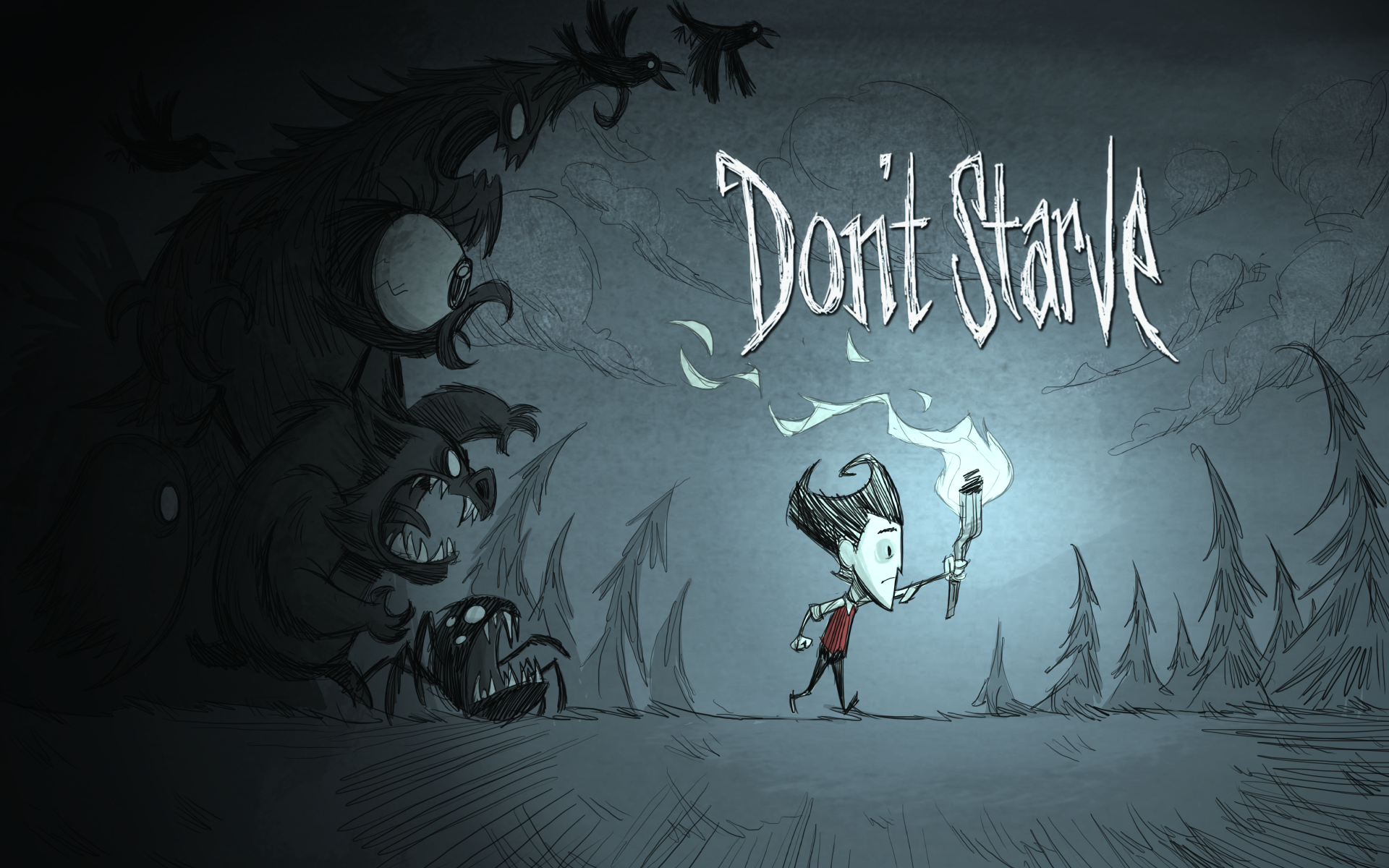
Don’t Starve

So you’re stuck in the wilderness, you have little resources to help you survive, you’re cold, hungry and insomnia could collect its toll if you don’t act fast. I know of one man that could help, and no, Bear Grylls is not that man.

Yes, I hear you breathe a sigh of relief; drinking one’s own urine and eating worms like they’re going out of fashion is not on the menu in this uncompromising wilderness survival game full of science and magic… and pigs?

Surgeon Simulator 2013

Simulation games over the years have widely spread into many different simulation clichés, starting from the earliest aircraft simulators to wacky farming simulators, truck simulators and even bus simulators.

One of the first ever games I remember viewing was Microsoft Flight Simulator, and I say ‘viewing’, because my Dad had an over-protective trait for this game. I would stand and watch from a safe distance, making sure I wouldn’t interrupt him in his moment of flying glory.

Now I’m no expert in the field of surgery and I certainly wouldn’t be writing this if I was. Yet I do have a steady hand when it comes to the electronic board game Operation. So with my heart full of hope and my steady arm at the ready, I downloaded a game on Steam which would test not only my steady arm but also my knowledge of anatomy and my patience in the operating theatre.

The ‘operating theatre’, such a pleasant name for a place that should have all emphasis on the word ‘operating’ and not the word ‘theatre’. Not in my book! So yes folks, I have played Surgeon Simulator 2013. I should point out before you read on, that since playing I have been banned from hospitals, clinics and even vets.

Crysis 3

What exactly is the crisis in Crysis? If you remove the ‘aliens have aggressively invaded our planet from inside and outside’ element from it, the Crysis story still has a lot more left to tell.  Given there have been four single-player campaign games including the latest installment of Crysis 3, this makes for a rich lore for a first-person shooter. To confuse matters yet further, the back story has been expanded by a novel based on the story elements from Crysis 2, and there is even a comic book series that tells the story between Crysis and Crysis 2.

The available history provides all the main characters that you have some interaction with (and many that you don’t) the opportunity to have ‘deep’ back stories of their own. What all this wealth of back story means, is that I can’t really do the story any favours here, without perhaps spoiling it for you just a little. If  you’ve not played it, I recommend you go and play Crysis 2 first and just skip the first section of the review. If you’re not really bothered about all that and just need a new futuristic first-person shooter to play, read on.

The Walking Dead: Survival Instinct

If I reflect back on the past few years of my life, many of my memorable accounts will be that of watching TV shows and films or playing games that are of a fantasy or horror genre. Being that I follow religiously The Walking Dead TV Show, I have always tried to stick to my guns and obey the ‘must buy anything related to the TV show’ scenario to a tee, even though on occasion I have been let down staggeringly. Yes, I’m a sucker for punishment; I know.

When Telltale Games decided to launch their take on The Walking Dead comics back in 2012, I was at first skeptical of purchasing their title, being that I hadn’t read any of the comics and having been told that it doesn’t join at the hip with the TV show. After reading the great reviews that the game logged, though, I snapped it up in an instant. Finding myself gripped to a characteristic journey and reminiscing past point-and-click games like the highly acclaimed Broken Sword series, I had to replenish my excitement and carry on watching The Walking Dead on TV until another Walking Dead game would cross my path.

Then without a massive array of previews and with little known about it, The Walking Dead: Survival Instinct suddenly made an appearance.

DLC Quest

The gaming community these days can get very vocal when touching on DLC practices, which have us wrapped around a selling point spiral when purchasing any new game. It’s now the norm that the question on every gamer’s lips when purchasing a game is if it will feature DLC or not.

It wasn’t so long ago, back in the late 80’s through to the 90’s, where DLC was not even heard of. ‘Retro gaming’, as they now call it, would always present us gamers with the knowledge that the game was a completed article and a one-off money transaction would be all it took to make one satisfied. While I find myself in the middle of the question: ‘is DLC good or bad?’, I can safely say that I have found an answer. DLC Quest from Going Loud Studios brings a comedic adventure that mocks the video-game industry and their exploitation of DLC.

BioShock Infinite

BioShock was a game I wasn’t the slightest bit interested in when it came out. I’m not sure if I even had a 360 at the time. Even if I had, its curious mix of scary adventure and visceral, plasmid-assisted shooting would’ve likely been somewhere near the bottom of my ‘To Buy’ list, nestled under Gears of War and Fable.

However, after getting it from LoveFilm almost three years after it was released, I couldn’t believe what I’d missed out on. The richness of the world, the sheer quality of the storytelling; all without sacrificing one inch of satisfying gameplay. I was hooked.

The second game was disappointingly not developed by Irrational Games and it showed, being an admirable follow-up but failing to bring the same undeniable quality. As soon as I heard Irrational was developing BioShock Infinite I remained intently glued to the internet and our database thread, desperately hankering for another crumb from Ken Levine’s table.

Well, the wait is finally over and my God, was it worth it. I wrote a piece a few weeks ago about how this game was going to save the genre it sometimes awkwardly sat in. While I was maybe a little overzealous with that statement, I can safely say it’s gone quite a way towards fulfilling it…

Sniper Elite: Nazi Zombie Army

Left 4 Dead, Call of Duty: Zombies, DayZ, Dead Island… there’s certainly been no shortage of zombie-shooting games this generation. For whatever reason, we just can’t get enough of decapitating the rotting heads of shambling, brain-dead corpses.

The oncoming horde of titles shows no sign of slowing either, with the release of Rebellion’s new third-person shooter, Sniper Elite: Nazi Zombie Army. Yeah, you read that right: Nazi. Zombie. Army.

March of the Eagles

As a child, the endlessly popular strategy game RISK baffled me. Now 24 years old, it still baffles me. With its myriad of rules, conditions and situations it manages to make something as simple as conquering the known world surprisingly complex.

Okay, so maybe it’s not that surprising, but what’s interesting is that over the years little attempt has been made to simplify the game for any new generations. RISK has remained the hardcore choice for dedicated strategists, and Paradox Interactive’s March of the Eagles looks to recreate that difficult-to-learn, even-more-difficult-to-master formula on your PC. Does the presence of a clever AI and an intuitive interface curb the initial feelings of bewilderment and the coming complications of world domination? Hell, no…

SimCity

There has been a disappointing lack of quality, accessible simulation titles over the last few years. Like many long-time PC gamers I have fond memories of Theme Park, Theme Hospital, Rollercoaster Tycoon and, of course, SimCity. These were well-loved franchises that struck the rare and difficult balance of appealing to both hardcore and casual gamers.

What have we had recently? Cities XL has failed to reach the standards set by the city-building Granddaddy, and there’s been a slew of shovelware such as Farming Simulator, Street Cleaning Simulator and Delivery Truck Simulator. Tropico is one of the only notable series I can think of in years.

A decade since SimCity 4, however, Maxis have decided it’s about time they show everyone how it’s done and resurrect SimCity, with the release of… err… SimCity.

Aliens: Colonial Marines

You’d think that a license as iconic as Aliens would have resulted in some phenomenal games over the years, but really, what’s come since the 16 bit era has been nothing but a string of disappointments. Most recently, Rebellion made a decent fist of Aliens vs. Predator but fell short, providing an underwhelming game that only hinted at its true potential. Meanwhile, Obsidian’s hugely promising Aliens RPG was canned by SEGA in favour of putting all their Xenomorph eggs in Gearbox’s generally successful basket. To be fair, for a while there it was looking promising too…

With this review delayed, though, you’ll likely already know what happened. Alien: Colonial Marines bombed critically as co-developers Gearbox and Timegate attempted to shift the blame to each other, while SEGA still seem to stand oblivious as to what the hell went wrong.

If you’re looking at us for a review that deviates from the mainstream’s perception of the game, then you’re going to be disappointed: Aliens: Colonial Marines is undeniably scary, but for all the wrong reasons.

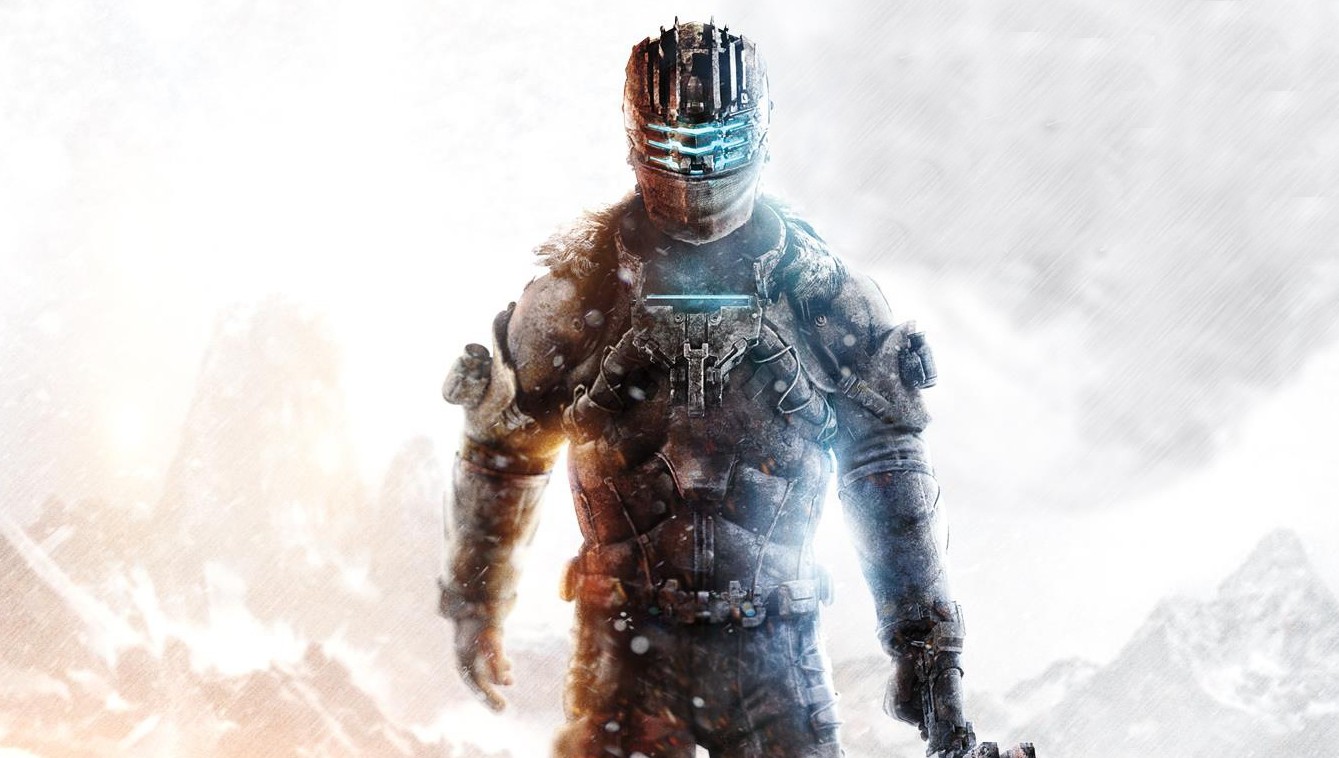
Dead Space 3

My worst fears have come true. They didn’t manifest in the face of rampaging necromorphs with crowbars. Nor did they emerge in the emptiness of an outer-space wasteland.

It’s the horrible reality that the face of Dead Space has changed irreparably, and much of the ambience and atmosphere initially embedded in the franchise seems to have been permanently lost.

Impire

Back in my youth when I first started experiencing PC gaming on a dreadful family Windows ME machine, I sadly did not have the foresight to check PC magazines or sail the 56k seas of dial-up for video-game reviews. As a result, my library was utter pot-luck. It consisted of gems I’d stumbled upon by accident in my local dingy computer shop, as well as piles of tripe I’d had the misfortune to purchase, that no doubt were discarded long ago and are now lingering at the bottom of a landfill.

Thankfully, there were some brilliant titles in my collection. Morrowind probably gave me my fondest memories, but if I’m honest, the only reason I bought it was the pretty box art. I mean, c’mon, it looked super-cool, like an ancient tome, and it had a map and everything. A map!

One main downside of my recklessly uninformed approach to game purchasing was that I missed out on some true classics. Half-Life? I played the hell out of Counter-Strike: Condition Zero, but had little knowledge of the genre-defining shooter that spawned the mod in the first place. Deus Ex? Never even heard of it.

The Dungeon Keeper series is another example of a name that will bring misty-eyed nostalgia to any classic PC gamer more well-informed than I. With the unique concept of crafting your own dungeon and getting to play as the bad guys whilst you defended it from do-gooders, it was a blast. So I hear, at least.

Yet with the release of Impire by developers Cyanide, I finally had a chance to experience a spiritual successor to the series. Unfortunately, Impire smacks all too hard of one of those grossly misinformed purchases of long ago…

Family Guy: Back to the Multiverse

Here we are. A Family Guy game. Excited? In theory, you should be, right?

A long-running series that has a ton of characters and episodes to draw from. A team of writers who have their own brand of comedy that are on board and in charge of the game’s script. A simple art style to emulate. What could possibly go wrong?

The Cave

Ron Gilbert, of Monkey Island fame, has been harbouring an idea for decades. Initially it was this concept: A cave that pulls people into the recesses of their mind, where the dark thoughts reside.

The idea stayed with him while other projects took precedent for almost twenty years, until the recent collaboration with Tim Schafer’s Double Fine Productions finally took the concept and made it a reality.

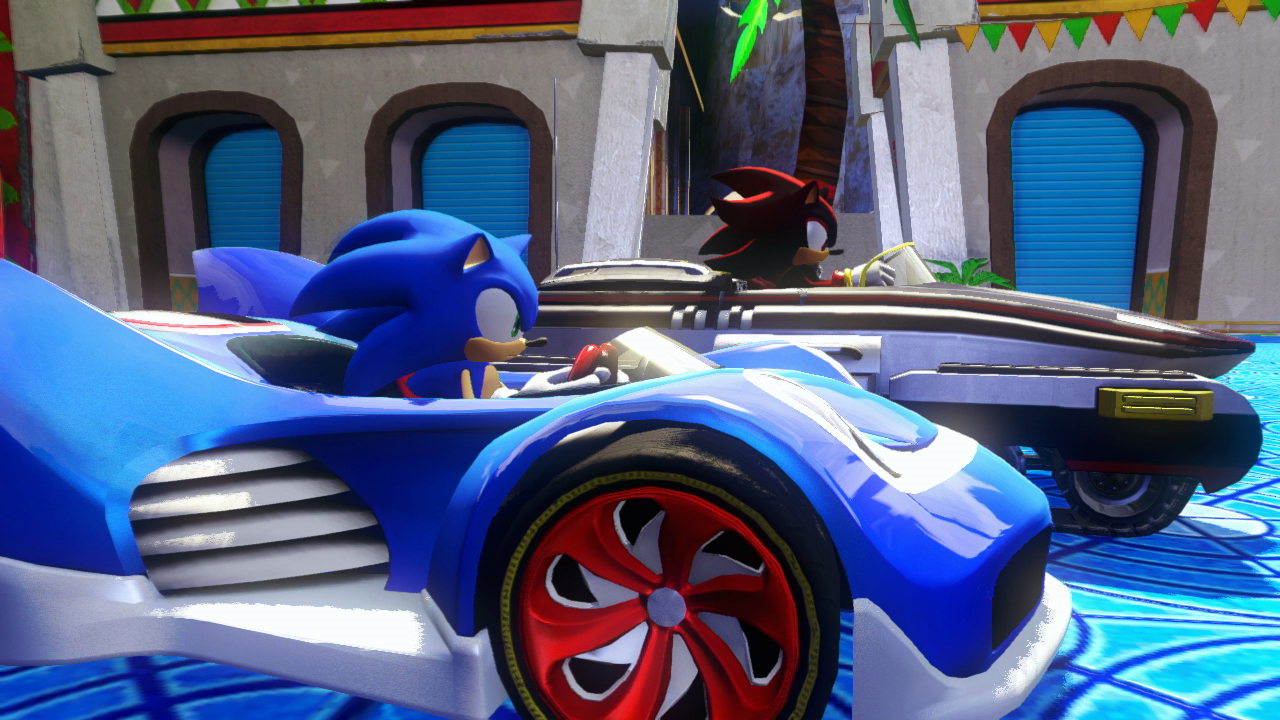
Sonic & All-Stars Racing Transformed

I think that everyone coming into Sonic & All-Stars Racing Transformed for the first time will cynically expect the same thing; a painfully cheap and undercooked Mario Kart clone. I mean, that’s what I was expecting, certainly, and it was the exact reason I’ve kept well away from Sonic-themed racers right up until this point.

Only… I had it wrong. Sonic & All-Stars Racing Transformed is actually brilliant, and in many ways surpasses its own inspiration.

DmC: Devil May Cry

It starts. The 2012 lull is done and dusted. The holidays are over and the 2013 gaming season has begun. Now the first of the heavy hitters is off the blocks and wants your money.

DmC (better known to some as Devil May Cry) has been plagued with controversy since the day it was announced. With a new developer comes a new look and style for the illustrious franchise. For Ninja Theory, it’s been a bumpy ride ever since.

Now we’re here with a verdict. Have Capcom made a grave mistake outsourcing this iconic series?

Edna and Harvey: Harvey’s New Eyes

Let me start by saying I love point ‘n’ click adventures. Good ones at least. I grew up on Broken Sword and have recently sampled the joys of Monkey Island and Beneath a Steel Sky, all series that are just as playable now as they were back then.

Despite a shaky period with a fucking awful attempt at turning Back To The Future into an adventure game, this year Telltale blessed us with The Walking Dead Game, likely the best adventure game in recent memory. It may even spell a resurgence for the genre, and with Double Fine Adventure and The Cave on the (admittedly distant) horizon, there’s certainly excitement building for the return of one of gaming’s most beloved and missed genres.

This open brown-nosing of the adventure genre is not really my style, but in this case it serves to highlight how great the genre can be and to make the rest of this review seem all the more condemning. Edna and Harvey: Harvey’s New Eyes (HNE) is literally an offence to the genre. It’s a giant middle-finger salute to the hard work and brilliant creativity of the greats and it’s adding horribly to the growing number of shoddy, pathetic and worst of all apathetic adventure games that are giving genre-detractors fresh ammo on a weekly basis.

Painkiller: Hell & Damnation

Being mainly a console gamer for most of my life, the apprently epic title that was Painkiller completely passed me over. I was also about 14 when it came out and so much too young to get hold of it in the shops. After a bit of research I found that not only was a it a smash hit (despite borrowing heavily from Doom and Quake), it also had a massive run of expansions, mods and different versions keeping it going over the years.

Originally crafted by People Can Fly, whose latest FPS foray Bulletstorm was an interesting and hilarious take on the genre, developer The Farm 51 has decided to remake the vanilla game and repackage it for a new generation. With its gameplay rooted firmly in the wave-battle style of the FPS pensioners, can it really satisfy today’s plot-hungry audiences?

Hitman: Absolution

Hitman: Blood Money was my first real taster of IO Interactive’s assassination simulator series, and I instantly became a fan. I already loved stealth games as a general rule, but Hitman’s open playground and limitless possibilities really struck a chord with me, to the point where I retroactively went back and played the previous titles.

It’s been a long wait, then, for Hitman to return to our screens once more. Will my love still be… absolute?

Absolute. Heh heh, I’m a genius

DOOM 3 BFG Edition

You’ve played DOOM, I know you have. No self-respecting gamer could possibly hold their own, in a conversation about any other first person shooters, without having played at least the first level. Reasons are obvious I’m sure. How would you know how far shooters have come? It’s amazing to even imagine that you couldn’t even look up or down, jump even. Oh how we laugh about it and lightly slap our thighs in amusement.

So you’ve played it? Yes? …No? Really? Am I really that old now that there are gamers out there that haven’t played DOOM? Alright, I get it; it is really old-school. How about DOOM 2? Sure you did. No!? You’re messing with me, aren’t you?

So what you’re telling me is that you’ve been playing all of these triple-A shooters, your Call of Duties, your Battlefields, your Halos and your My Little Pony Battle Stars. I understand. I may have made that last one up, but they’re good aren’t they, perhaps great even. Yet don’t you feel the hankering, the awe of wonder and the lust for adventure into the unknown distant past, into a story set in corporate-owned future hell? Yes, yes, yes?

DOOM 3 BFG Edition: we’ve mused (albeit unoriginally) on the podcast a few times now that it’s the Roald Dahl-inspired and much-needed Big Friendly Giant version of DOOM 3. The version that you never thought you needed. Complete with snozzcumbers and terribly damaging whizzpoppers! Luckily it’s not that at all; it’s something much better.

Out of the box you get the original DOOMDOOM 2, a remastered DOOM 3 and some extra content, some old and some new. Let the gates of hell re-open (again), before I have to go shopping for some more milk…

Frozen Hearth

As someone who reviews games while also learning to make them, you start to subtly change the way you think about games. This counts doubly for games that are made by smaller teams. I’m finding it increasingly hard to just throw things away just because they maybe don’t have the same level of polish as a big AAA title. At first impressions, Frozen Hearth looks like substandard RTS made in the early 2000s. Play a little more, however, and you realise that there are some good ideas hidden underneath.

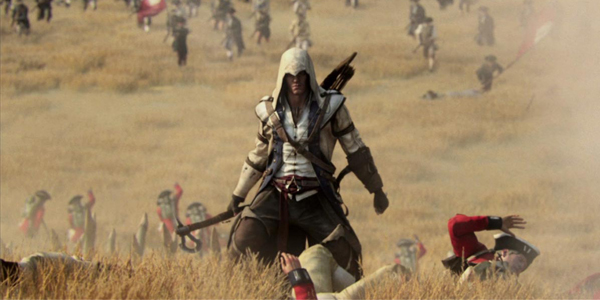
Assassin’s Creed III

From the moment it first touched down on Xbox 360, the Assassin’s Creed series has been at the forefront of cutting-edge action stealth gameplay. From Altair’s journeys through Crusade-era Syria, to the tale of Renaissance-man Ezio Auditore stretching across three epic titles, the series has also allowed us to experience history like never before. After the resounding success of Ezio’s plotline, Ubisoft are looking to bring main protagonist Desmond’s story to a close also with Assassin’s Creed III.

Have they managed to bring this most epic of series to a satisfying close? Has the departure of fan-favourite Ezio spelled doom for the franchise? Worry not Assassin’s fans; Ubisoft know exactly what they’re doing, and we never should have doubted them.

Far Cry 3

2012 has been an extremely competitive year for games. My GOTY has changed about five times, and we’re not even in December. If nothing else, that’s a testament to the quality of titles developers have been churning out from all spectrums, from the mobile sector through to the AAA leagues.

However, I’m confident that on December 31st, when all is said and done and the smoke is cleared, Far Cry 3 will be the game that stands tall above the rest.

Far Cry 3 is the best Far Cry game to date. It’s one of the best games Ubisoft have ever done and, as far as I can tell, it’s the finest example of gaming quality I’ve seen in 2012.

Here’s why…

Medal of Honor: Warfighter

In 2010, EA followed Call of Duty’s lead and finally brought their previously WW2-only franchise, Medal of Honor, into the Modern Warfare era with developer Danger Close at the helm. Unfortunately, Medal of Honor simply failed to live up to the lofty goals set out for it. Not even a DICE-developed multiplayer could mask its mediocrity in the eyes of the critics.

Still, undeterred, EA have given Danger Close another bite of the cherry with Medal of Honor: Warfighter, which hit store shelves a month ago.

A worthy challenger for Call of Duty, finally? Not by a long shot…

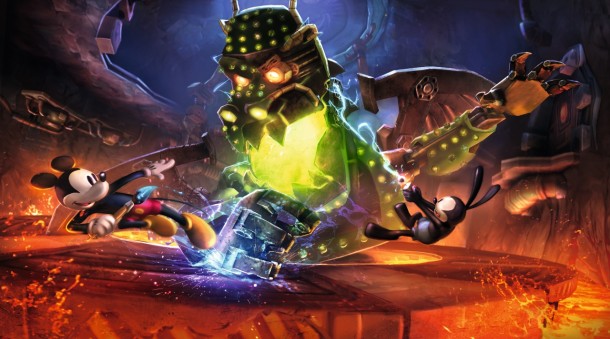
Epic Mickey 2: The Power of Two

Two heads are better than one, or so they say. A few years ago, Warren Spector spearheaded a Wii exclusive project that aimed to bring the world’s most iconic cartoon character back to his classic platform roots.

He succeeded. Mostly. Yet, glaring issues with control and camera hampered player’s overall enjoyment. That, and the game lacked support for multiple players.

Now his team are back with a sequel that aims to right the wrongs of its predecessor and in the same breath, share the wealth with every other format out there.

While he’s been successful on many counts, unfortunately, Spector and Junction Point Studios have managed to create a whole new set of problems.

Football Manager 2013

Let’s be totally honest about this: football fans are a fickle bunch. When our team is winning, our manager and his players are the best thing since sliced bread. They can do no wrong, and anyone who dares question them will get derisory looks and comments that would have them avoiding any dark alleys at any time of day, at risk of a swift kicking.

On the flip side, when things aren’t going so well the blame lies squarely at the door of the gaffer. The players are still brilliant, but the manager picks the wrong ones, plays them all out of position and has no notion whatsoever of a positive substitution.

It is also fair to say that us fans know best, regardless of the manager’s experience in the game. Terrace/pub chatter dictates that the average football fan would have made Wigan Premier League champions and led England to European and World Cup glory over the past ten years.

This is why when the latest Football Manager game hits stores, every single football fan’s ears prick up, the hairs on the back of the neck stand up and we get our duffel coat at the ready. We prepare to spend hours, nay, weeks scrolling through an endless list of players as we look to lead Barnet away from the foot of League Two all the way to Champions League success.

R.A.W. (Realms of Ancient War)

Suffice it to say, there have been a lot of fantasy video games over the years. More and more keep coming, and as gamers we can only hope each one stands out in its own way. Hopefully each one has something unique to offer.

Sadly, RAW doesn’t have anything new to offer. In fact, it doesn’t have anything good to offer at all. While it’s not a terribly flawed game, it never goes beyond the level of mediocre.

F1 2012

I have to be honest and say I am not a huge fan of driving games. However, not many sports fans don’t have at least a passing interest in the Formula 1 and you all know I’m a big sports nut. So an F1 video-game automatically becomes a kind of “between a rock and a hard place” affair. Does F1 2012 reach out to my sporting desires, or is it just another racing sim in shiny F1 clothing? Read on to find out.

FIFA 13

Love it or hate it, football is almost always in the news. From players tweeting inappropriately, or the age-old debates about diving and goal line technology; to what constitutes world-class, and the latest YouTube clip of another Messi wonder-goal; you just can’t get away from it.

The battle for supremacy on console football is almost as passionately fought these days. Having seen what Konami produced with PES 2013 I was given the task of seeing how EA Sports FIFA 13 measures up. Read on to find out.

XCOM: Enemy Unknown

Strategy games have rarely been a great fit on home consoles. Sure, we had Halo Wars and that was a bit of fun, but realistically, it wasn’t a patch on the Total War series or anything else of a similar ilk.

Undeterred however, Firaxis are not only rebooting legendary PC franchise, XCOM, but they’re determined to make it an engaging fit for 2012 audiences.

How did they get on?

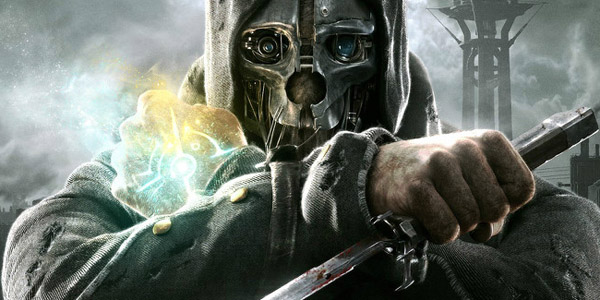
Dishonored

The shadows remain a comfortable place for many gamers. They offer an alternative path both tense and undisturbed. Yet, while this method of exploration is prevalent in most games, it has perhaps never been so integral and significant as it is in Dishonored. Yet at the same time, so completely irrelevant.

Dishonored is one of the first games to allow the player total freedom to play how they want, when they want.

This is both its greatest strength and biggest weakness.

Mark of the Ninja

I’ve always had an uneasy relationship with stealth. Sneaking about in shadows for ages, cutting one throat per hour has never seemed like much fun and I’ve never been very good at it. I’m the guy who stays hidden just long enough to take a position of advantage before unleashing merry hell with whatever weapon the game deems to give me. While I recognise the Hitman and Splinter Cell series’ as respected behemoths, I’ve never really got on with them.

It’s odd, then, that my favourite XBLA game of the year so far is a stealth title. Not a game that involves stealth; a proper sneak-em-up where one false move can spell instant death and where killing while hidden is about the only way you can do it. Klei Entertainment, the visionary creators of Shank, have not only managed to craft one of the best stealth games ever made but craft it so well that even life-long avoiders like myself cannot stop playing it. Let me explain…

PES 2013

There are certain things that are synonymous with Autumn; blackberries, leaves falling from the trees, the heating going on for the first time since Easter, and the release of big video-game sporting franchises. This year, Konami have given us PES 2013 a little earlier than usual, perhaps to get a head start on their big rival in that all-important battle for supremacy.

I, like many journalists, was fortunate enough to receive the review copy of the game in advance of release with a view to giving you, our beloved reader, the low down before the game hit the high street on Friday 21st September. However, Konami decided that they were not going to enable the servers to allow online play until that date so, unlike many of our larger more professional peers, we made the decision to delay posting our review until this part of the game could be fully tested. This enables us to give you all the facts.

So to coin a phrase, does PES 2013 “hit the ground running?” Read on to find out.

Borderlands 2

Ah, sequels. They’re both the scariest and most exciting thing, aren’t they?

Borderlands is the most successful new IP in recent memory, so 2K were always going to commission a bigger, badder and better sequel.

Did they get exactly that?

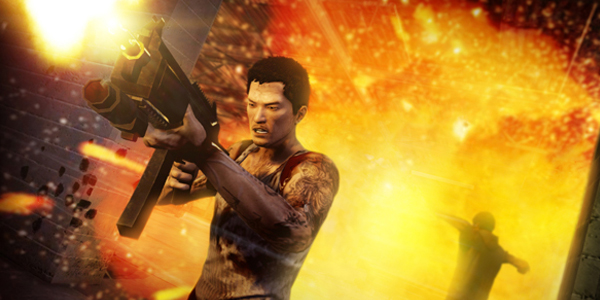
Sleeping Dogs

Action cinema is something we take for granted these days, but back in the day we had to settle for John Wayne cowboy movies and the occasional Steve McQueen thriller to satisfy our cravings for visual violence. Then along came a little-known Chinese director who changed everything: John Woo.

With just two films, The Killer and Hard Boiled, he revolutionised the way we viewed the gunfight, crafting almost poetic sequences with a flair and aplomb never before seen. He directed the actors like dancers and used the physicality of stars like Chow Yun Fat to create a whole new style of cinematography dubbed balletic gunplay. Pretty much every dual-wield dive through a plate glass window, modern gunman showdown and slo-mo bullet death owes a debt to Mr Woo. Without him there would be no Matrix, no Max Payne and now, no Sleeping Dogs.

Originally a fresh IP from little-known developer United Front Games called Black Lotus, it was quickly snapped up by Activision and rebranded as True Crime: Hong Kong in an effort to rejuvenate the old franchise for a new generation. Some time later the corporation declared that the game “…just wasn’t going to be good enough.” and dropped it in the lurch, leaving its future in question and United Front with an 80% finished game and no publisher.

Fast-forward a year and Square Enix London are among the companies being courted by the ailing developer. Claiming they’d found a diamond in the rough, the Japanese company picked it up and immediately began working with United Front to release the game under a new title: Sleeping Dogs. It’s finally here and the big question is, has it lived up to expectations? Squeenix said that Activision must have been crazy to drop the game, so let’s find out if they were right.

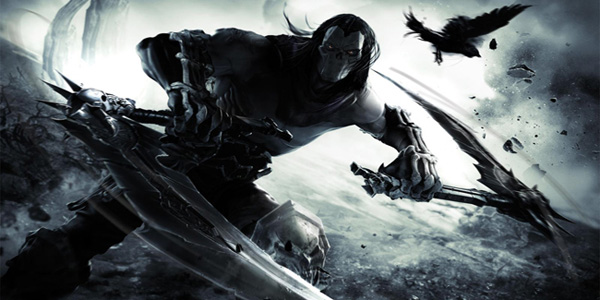
Darksiders II

Death waits for no man. It can’t be outrun. It can’t be outsmarted. There is nowhere to hide.

The representation of the Grim Reaper varies from place to place; both appearance and attitude are depicted differently by culture, race and imagination. This is as true of the protagonist of Vigil Game’s Darksiders II as anywhere else. As such, there is no right or wrong way to see the world’s most feared executioner. We’re unified in our belief that the Reaper walks a path of destruction, leaving nothing alive in its wake, and that’s all that matters.

Thankfully for THQ, however, the path set before us in Darksiders 2 is one we will all want to walk and see through to its conclusion.

Zuma’s Revenge

Over the past decade or so, PopCap games have taken the idea of casual gaming to previously un-thought of heights. They are now at a point where their games are at the forefront of almost every gaming platform known to man (or woman), from internet and social media sites right down to smartphones and hand-held consoles.

The vast majority of these titles sit comfortably in the puzzle category and are incredibly simple in structure, offering a gentle challenge and an uncanny knack of making you play just one more game. The original Zuma was a shining example of this, and the recently released sequel Zuma’s revenge looks to build on the ball-firing addictiveness of its predecessor. Read on to find out if it succeeds.

Game of Thrones

George R.R. Martin’s fantastic fantasy series has taken the world by storm, thanks in part to the hit HBO series which debuted last year. With so many dynamic, unpredictable and interesting characters, coupled with a luxurious, beautiful landscape, the Seven Kingdoms has sucked us in with sickening virtuosity.

However, with a world so vast, a game is necessary to help fill some of the gaps in the lore. Enter Cyanide Studios and their RPG interpretation. A title that prompts incredible promise and expectation, but is this all we want it to be?

The Elder Scrolls V: Skyrim – Dawnguard (DLC)

Since it hit the shelves in November last year, many of you have spent an inordinate amount of time in Skyrim. It’s surely a testament to the depth and quality of Bethesda’s latest Elder Scrolls world that it remains in many people’s most played lists despite having no multiplayer to speak of.

Even so, there’s only so much to do and so much to see in Skyrim and Bethesda know this. Like any good developer they’ve been teasing us with the promise of ‘less but bigger’ DLC in comparison to Oblivion, and they recently made good on that promise with the release of Dawnguard.

With a hefty price tag of 1600MSP (about £14) and the world of Skyrim already pretty full, is Dawnguard worth the purchase? Unfortunately this is one of those tricky things that entirely depends on what you’re expecting, what you’ll be happy with and how much you hope to get out of it. I’ll lead you through my experience of Dawnguard, as well as my overall impression, and you can make up your mind.

NOTE: This is simply my playthrough of Dawnguard, following one of at least two possible paths. This is by no means the definitive account of the Dawnguard experience but an impression of my time with it.

The Amazing Spider-Man

As the site’s resident Spider-Man fanboy, I have been fervently awaiting both the new Hollywood reboot, The Amazing Spider-Man, and its inevitable smash n’ grab video-game tie-in from Activision.

For the third time running, Beenox return to development duties for the Webhead, having had moderate success so far. They hit the ground running initially, providing a solid Spidey game in Shattered Dimensions, in spite of swapping the usual open-world playground for a structured affair. Unfortunately, their follow-up Edge of Time fared a lot worse, restricting things a little too much and leaving players with a hollow, repetitive experience that wholly disappointed.

With The Amazing Spider-Man tie-in, however, things have been looking back on track. Open-world New York returns in its starring role, while the much-touted Web Rush mechanic offers players a more precise and stylish way to navigate.

The movie, for me, totally hit the mark. Does the game follow suit or is this yet another weak-ass movie game, rushed out for a quick buck?

Magic: The Gathering – Duels Of The Planeswalkers 2013

If you are anything like me, the idea of a card trading game fills you with about as much excitement as watching paint dry, and the idea of playing such a game on a console is like pairing Mary Poppins with Mr T: it just shouldn’t happen.

Naturally, this means I had absolutely no prior knowledge of the Magic: The Gathering series. I’ll be honest and say when I was asked to review Duels of the Planeswalkers, my first thought was one of questing across vast planes in a scaled down Action/RPG for XBLA. Obviously I was a little shocked when I first fired the game up, to find the latest release in a series I now know spans almost twenty years and is the most popular card trading game on the market, with over twelve million players.

Having overcome my initial shock and after spending a little time looking at the series’ history, the question is would I add myself to that number? Read on to find out.

Spec Ops: The Line

Morality is something games really struggle with at the moment. They seem to really focus down on being binary: good or bad, positive or negative. Jaeger’s Spec Ops: The Line throws this idea out the window as it presents you with choices no man should have to pick from. All this takes place inside of a story that makes me want to put this game up on a pedestal as a truly adult game.

Turtle Beach Earforce X12 Headset

Sound. So often sidelined when reviewing games, yet it’s amazing how much difference it can make to an experience. Much of Arkham City’s atmosphere and wonder is owed to the fantastic score and exemplary sound design. Dead Space would be nothing without its eerie soundscapes, the Ishimura simply a dead ship without its creaking and groaning and breathing. Many of us are content to play our games on HDTVs which, on average, have fucking awful speakers. Tiny, tinny little cones jammed into our flatscreens, washing out our audio and filtering out all those gorgeous frequencies that the sound designers spent so long putting in.

You could buy an expensive soundbar or surround sound system. You could even hook up your console to your hi-fi system. Or you could spend much less and pick up one of Turtle Beach’s world-renowned headsets. Specifically engineered for gaming and designed to work as both headphones and headset, many of these prized peripherals come with a hefty price tag, making them unaffordable for most. Enter the Earforce X12 for Xbox 360 and PC. For the price of a new game you can experience surround sound, rich lows and shocking highs. I bought one and my days of listening to my games through my cheap TV’s speakers are gone.

Deep Black: Reloaded

It seems to be the case that every other game is a shooter these days, and so it’s not surprising that every possible setting and premise has been exhausted. Almost. Going underwater is mostly uncharted territory for the genre, making Deep Black: Reloaded a pioneer in adventuring through the murky, unexplored depths.

Will it sink or swim?

Ghost Recon: Future Soldier

Despite a lot of the gaming community being divided on the merits of the Ghost Recon series, with the likes of Halo and Call of Duty leading the way for shooters, I can safely say that Ubisoft’s series has been a firm favourite with me since the very beginning. It was my first taste of a punishing, more realistic type of shooter. One shot was enough to down you easily and brutally, and the use of camouflage and your available teammates was essential to succeed.

Although the game took a step towards the future in Ghost Recon: Advanced Warfighter and its direct sequel, the core principles of the game remained intact. Slow burning, tactical combat ensued, and it was gloriously fun.

Ghost Recon: Future Soldier is the name of Ubisoft’s next foray into the Tom Clancy’s universe, and there is change afoot after a five year hiatus. More change than the series has ever seen before, I might add, but is that change a good thing?

Prototype 2

Back in 2009, when Activision were still largely talked of as the darlings of the current generation console owner and COD was still hailed as a fairly innovative franchise, developer Radical Entertainment produced Prototype, a sandbox game with a difference. Instead of moody Eastern Europeans, car theft and an abundance of firearms, we were given super powers and a plot rammed to the brim with conspiracy theories and double-crosses.

Roll the clock forward three years and much has changed in the world of video-games. Activision are now often criticised, and amidst a wealth of AAA titles the likes of which we once could only dream of, even COD, the game of all games, gains critics quicker than a turd gains flies. What hasn’t changed is that Radical Entertainment still falls under the ever-growing umbrella of Activision. They know how to do conspiracy and intrigue too, as Prototype 2 takes everything its predecessor taught it and ramps it up a notch.

Men of War: Condemned Heroes

To be honest, being condemned to a penal battalion during World War 2 sounds like one of the worst ways to spend the war. Forced onto the enemy guns, armed only with what you can find, it does make for some impressive stories.

Unfortunately playing Men of War: Condemned Heroes, the latest in the real-time tactics series from Best Way, is an experience a little too close to being in a penal battalion: not very much fun at all.

Max Payne 3

It’s been nine long years since we last saw Max Payne, and nine years is a long time for a franchise that in 2001 was already ahead of the curve. When the first Max Payne hit, it was revered for its deep story of a cop relentless in pursuit of the truth, after being framed for the murder of his family. With its gritty noir style, it set the bar high for video-game storytelling and, in many ways it has not even come close to being matched. Throw in the then-ground-breaking bullet-time gameplay, and Remedy’s game was an undeniable classic.

In the time since the equally well-received sequel, developer Remedy decided to step back and start new projects, starting with a new pun-named character in Alan Wake. The Max Payne license has criminally sat dormant with Rockstar Games for nearly a decade.

When Rockstar finally decided to show their hand, it wasn’t what people were expecting. A fat, bald Max Payne walking around the streets of the uncharacteristically bright locals of Sao Paulo, Brazil? Many were worried, and I have to admit that in spite of Remedy’s involvement and backing to the project, I too was concerned that the series was stepping too far away from its roots.

As it turns out, we needn’t have worried. Rockstar have offered up one of the best shooters this generation has ever seen.

The Witcher 2: Assassins of Kings Enhanced Edition

Having never really been a PC gaming kinda guy, it goes without saying that my direct experience with The Witcher has been somewhat limited. From everything I’ve seen previously, it’s always given the impression of the type of role-playing experience that would appeal to me, but without a PC powerful enough to run it, I thought I’d never have the pleasure.

Thankfully, developer CD Projekt RED hadn’t really forgotten about us on the ‘lower tier’ of gaming; as their sequel, The Witcher 2, finally made it to Xbox 360.

Is it the adventure I’d been hoping for? Let’s see…

Risen 2: Dark Waters

Pirates of the Caribbean has a lot to answer for. As soon as you mention anything about pirates dealing with the supernatural, it’s swiftly drowned out by people moaning about the second, third and fourth films. Piranha Bytes, makers of the Gothic games and Risen, have jumped into this area with a sequel to Risen. As it turns out, it’s actually a pretty good take on the whole ‘supernatural pirates’ theme.

Naval War: Arctic Circle

In the frozen wastes of the Arctic Circle, a flight of JSF’s fly over the icy wastes. They are heading towards a target sitting just off the coast of Norway. Getting in range, they deploy their air-to-surface weapons before heading for home. The missiles arc, hitting the target and sending it sky-high.

The report box on your screen reads: ‘fishing trawler destroyed’.

Welcome to Naval War: Artic Circle; a game about intelligence, simulation and blowing up innocent fishermen.

Kingdoms of Amalur: Reckoning: The Legend of Dead Kel (DLC)

It’s always baffled me why the biggest games seem to get the biggest chunks of DLC. While MW3 gets flimsy maps instead of a booster to its blink-and-you-miss-it campaign, enormous games like Oblivion and Mass Effect get entire new areas to explore, complete with quest-lines and characters galore.

Colour me unsurprised then, when I heard that the first expansion to the unexpected (but much deserved) hit Kingdoms of Amalur: Reckoning was a whole new island full of side-quests, new characters and tons of loot; all for a credit-crunching 800MSP. Being such a fan of the vanilla game (read my gushing review here) I picked it up as soon as possible and it doesn’t disappoint one bit. In fact, it puts many other, less extensive chunks of DLC to shame.

Shoot Many Robots

Do you have at least three friends who enjoy playing video games?  Hopefully you do, because if you’re interested in playing Shoot Many Robots, you’re going to need all three of them. This side-scrolling, ‘bot-shooting mayhem of a game will require all four of you to be ready to kick some robot tail.

The game is one big parody of the American South, and it’s a hilarious romp. It’s not the best multiplayer game I’ve ever played, but it’s a pretty good time and a good way for friends to have fun killing robots together.

Yesterday

Even in their heyday, I can’t ever claim to being into point & click adventure games all that much. Zack McKracken and the Alien Mindbenders was my childhood highlight in the genre, while my experiences with everyone else’s favourites (Broken Sword, Monkey Island and Day of the Tentacle, etc.) have only come in recent years.

So, that would explain how I’d never happened upon anything by Spanish Developer, Pendulo Studios. My wife has, though, and eagerly informed me that their big hit was with the Runaway series; a light-hearted point & click adventure that has gone on to sell pretty well. A ‘Runaway’ success, if you will. Fnar Fnar!

So, it was with great interest that I went into their new game, ‘Yesterday’. After a little research, it seems to me that this new title is the result of a team stepping outside of their comfort zone and trying their hand at a darker, more gripping tone.

Is it Yesterday’s news, though?

Wargame: European Escalation

Gamers nowadays don’t like being punished for their stupidity. We have become used to having our hands held with frequent checkpoints and autosaves aplenty. We can stand up to a few games wanting to tear us apart, such as Dark Souls, but we are a little bit too quick to say “this game’s too hard”, and call for a toning down. Wargame: European Escalation, the latest from Eugen who made 2010’s RUSE, is such a terrifying game. It’s happy to dish out the punishment when you fail to control your forces perfectly, and gives you little opportunity to put right mistakes; and you know what? I really enjoy it.

Defenders of Ardania

It seems that Tower Defence is going through something of a purple patch at the moment, with social networking sites and modern-day smartphones seemingly a perfect platform for the genre. In a world where “quick fix” gaming is rife, the two seem to make perfect bedfellows, and titles like PopCap’s Plants Vs Zombies can match some of the world’s best puzzlers in terms of mixing a fairly simple concept with addictive gameplay.

In the world of home consoles, however, the stakes are higher. The competition for gamers’ play time comes up against the industry’s big hitters, which can totally immerse you in their sprawling worlds with well-structured storylines and breathtaking visuals. Having said that, I am rather partial to a bit of Tower Defence and I was quite keen to get my hands on Most Wanted Entertainment’s latest offering: Defenders of Ardania. Especially when I saw the press release that added it would “include light RTS elements.” What could be better, right?

Binary Domain

Binary Domain has been a bit of a weird one. I’d heard bugger all about it until a few weeks before it was released, and Sega haven’t exactly been backing it with the big marketing bucks. Neither of those scenarios are a good sign, let alone both, and my thoughts harked back to the shoddy mess that was Alpha Protocol.

Thanks to a postal error, my review copy turned up a few weeks late. Up to my eyeballs in Vita reviews and not feeling too optimistic about the game’s chances at that point, I can’t admit to being too deeply disappointed with the delay. Now? I’m still glad that it arrived late, but not for the reasons I had originally thought…

It’s a game that’s been largely ignored by the buying public and having now played it, I think it deserves a second look. This delayed review might just get people to give it that much.

Resident Evil: Operation Raccoon City

Resident Evil is the most immediate franchise for many when considering horror games. Its first incarnation on the PS1 in 1995 revolutionised fear in video-games, and taught us that less can definitely be more with sparse resources and solitary gameplay. Fast-forward to today and Resi fans have been spoilt, both by the bar-raising Resident Evil 4 in 2005 and the gorgeous action-fest of Resi 5 just a few short years ago. Patient as always, followers of Capcom’s franchise have had numerous editions of the last proper game, plus mobile spin-offs to keep them occupied until the inevitable release of Resi 6 later this year.

What to do until then, I hear you cry? Well, not one to make us go too long without a shot of the old T-Virus, Capcom have recently released Resident Evil: Operation Raccoon City. Following the course of an Umbrella clean-up team trying to cover their employer’s tracks after the monumental outbreak in the city, it takes a much more action-based approach in the the form of a co-op shooter rather than a survival horror. Controversially this instalment is developed by an external studio, Slant Six Games and only published by Capcom.

Is this a sign that the company is abandoning the survival horror roots of the series and letting it become just another action title? Well, not exactly…